


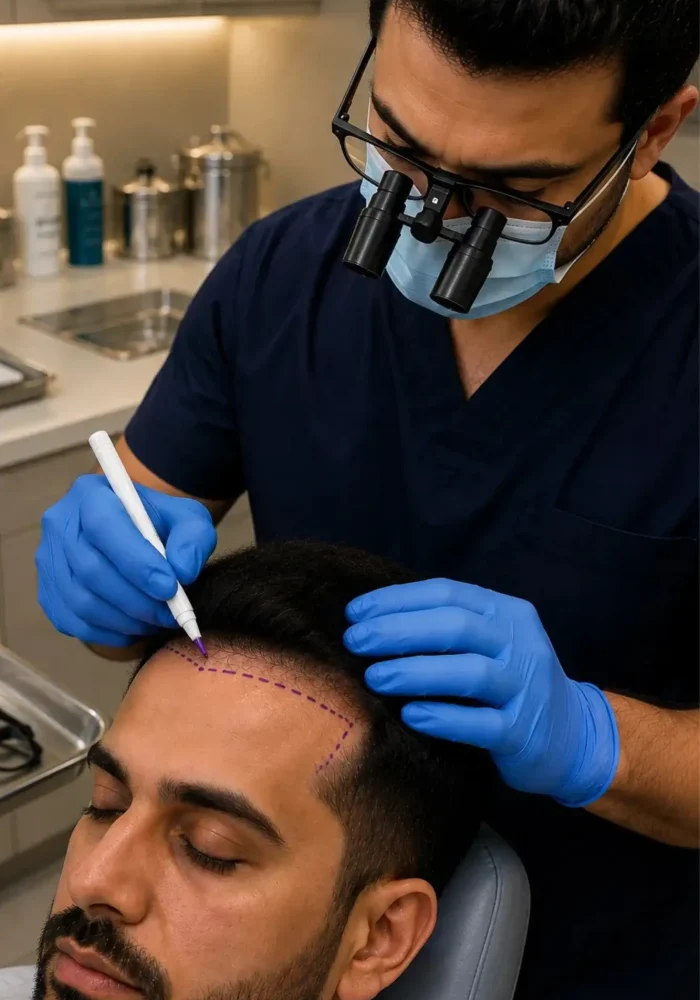
Hair Loss Medication in Peshawar, Prescribed and Properly Supervised
Medical treatment is the only thing that acts on the cause of pattern hair loss rather than its effects. Procedures stimulate follicles and surgery replaces them. Medication slows the process that is removing them in the first place.
That makes it the foundation of almost every serious hair loss plan, and it is also the part patients most often get wrong, because in Pakistan these medicines can be bought across a pharmacy counter without anyone assessing whether you need them, whether they are safe for you, or whether they are working.
Cosmetic Club N Clinic prescribe them after assessment, review them on a schedule, and discuss the side effects openly before you start rather than after you notice them.
Who Medical Management Suits
Early Pattern Loss in Men
The single strongest indication. Started while there is hair to protect, medical treatment changes the trajectory of a condition that otherwise only moves one way.
Female Pattern Thinning
Treated differently from men, with different medicines and a broader initial investigation, and frequently with excellent results in the early stages.
After a Hair Transplant
Surgery replaces lost hair. It does nothing for the native hair around it, which continues to thin unless something protects it. This is why a transplanted hairline in front of an untreated mid scalp looks wrong within a few years.
Patients Already Self Medicating
Perhaps the most useful consultation we offer. We establish what you are taking, whether it suits your actual diagnosis, and whether it is working, which is information nobody has given you so far.
Medical Management at Cosmetic Club N Clinic
Assessment
Trichoscopy, history and blood work where indicated, establishing what is actually causing your hair loss before anything is prescribed.
Topical Treatment Programmes
Prescribed, explained properly, and reviewed rather than handed over once.
Oral Treatment
Prescribed after a discussion of benefits and risks specific to you, with scheduled review.
Treatment for Women
A different approach with different medicines, appropriate precautions, and investigation of the causes particular to female hair loss.
Post Transplant Protection
Protecting the native hair surgery does not replace, which is part of every transplant plan we make.
Review of Existing Self Prescribed Treatment
For patients already taking something, an honest assessment of whether it is right and whether it is working.
Medical Management Compared With Procedures
Medical management | PRP and plasma therapies | Hair transplant | |
Acts on | The cause of pattern loss | Existing thinning follicles | Areas already bald |
Effect | Slows or halts progression | Stimulates and thickens | Replaces permanently |
Commitment | Daily, long term | Course plus maintenance | One or two procedures |
If stopped | Loss resumes over months | Gains fade over months | Transplanted hair unaffected |
Cost pattern | Ongoing, low monthly | Course based | One larger payment |
Best used | From the earliest stage | Alongside medication | Once loss is established |
Your Consultation, Step by Step
-
Trichoscopy and Assessment
Magnified examination of the thinning and donor zones, plus a history covering family pattern, illness, medication, diet and anything you are already taking.
-
Investigation
Blood work for thyroid, iron, vitamin D and hormonal markers where the picture suggests a cause other than pattern loss. Treating the wrong thing is the most expensive mistake in this field.
-
Diagnosis
You are told what is causing your hair loss and whether medication is appropriate. Sometimes the recommendation is to treat a deficiency and review in six months rather than to start anything long term.
-
Prescription
If medication suits you, it is prescribed with the benefits, the risks and the realistic timeline explained, and you leave understanding what you are taking and why.
Meet Your Clinicians
Injections are performed by a doctor. Female clinicians are available on request, and consultations are held in private rooms in Pashto, Urdu and English.
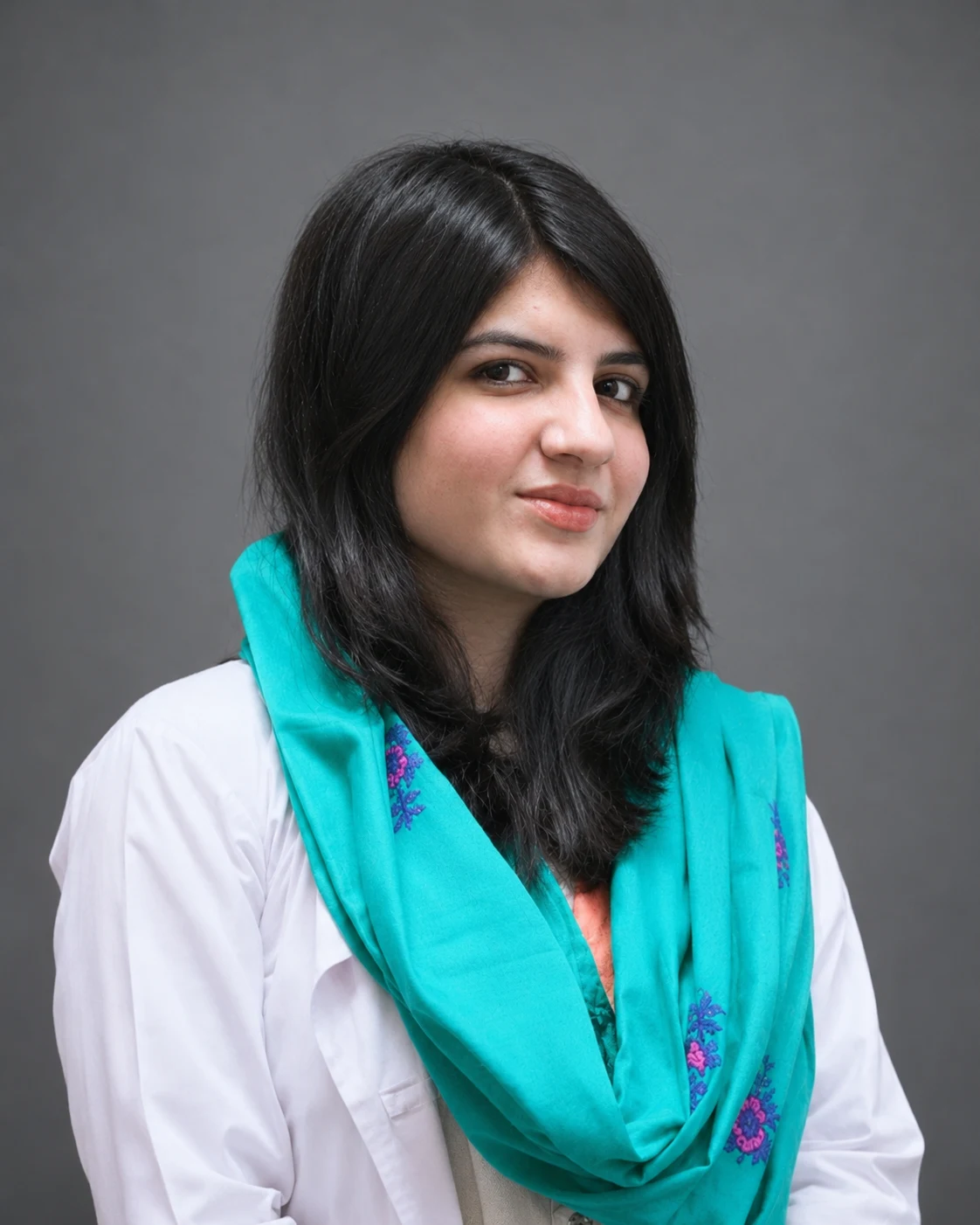
Dr. Esha Ali
MBBS, MRCS, Fellowship in Cosmetic SurgeryReconstructive And Aesthetic Plastic Surgeon
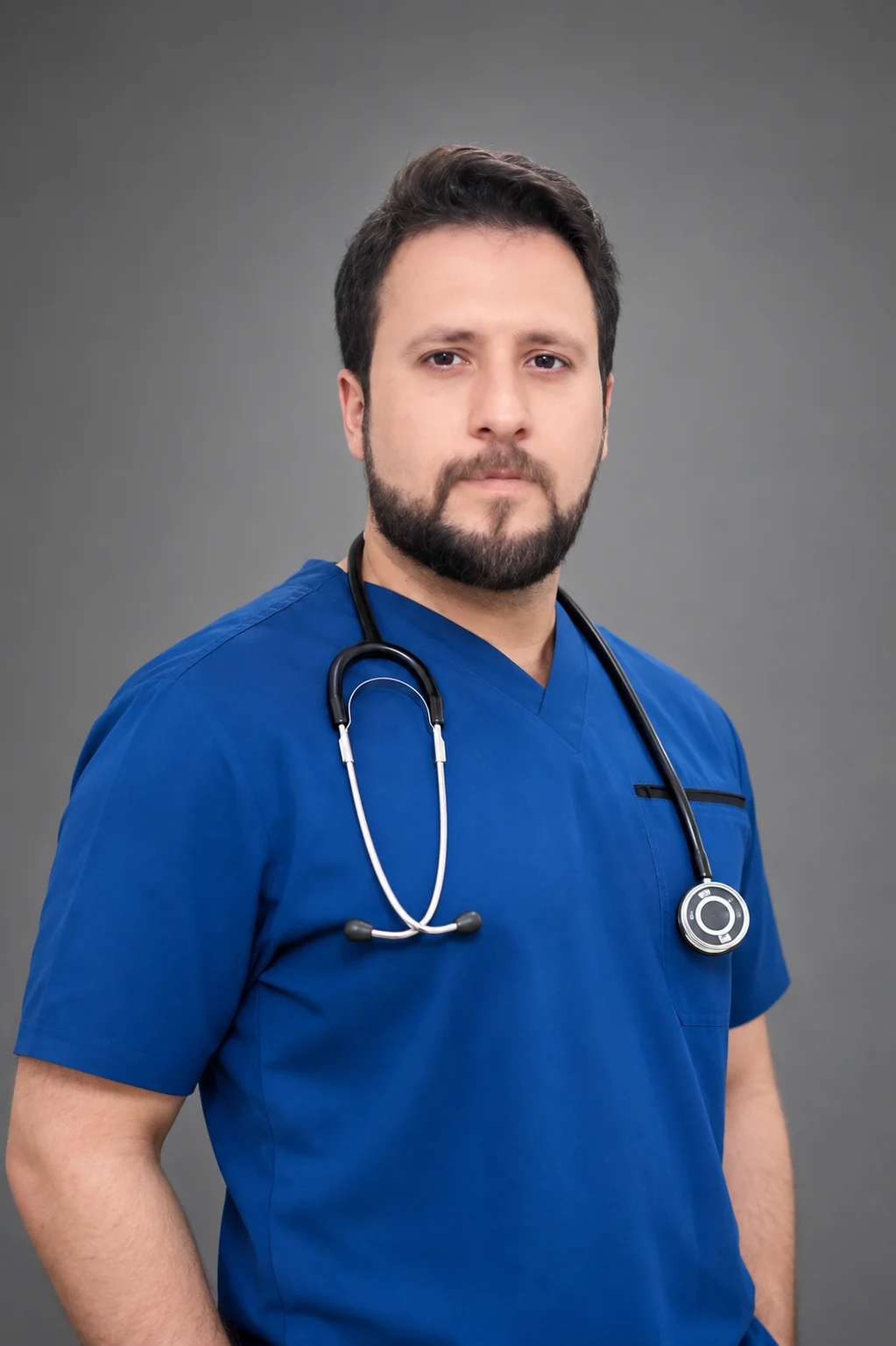
Dr. Mohib
Mbbs, Mcps, Mph, D-Derm Diploma, Diploma in Aesthetic Medicine, Diploma In Liposuction and Nano fat graftingHair Transplant Surgeon
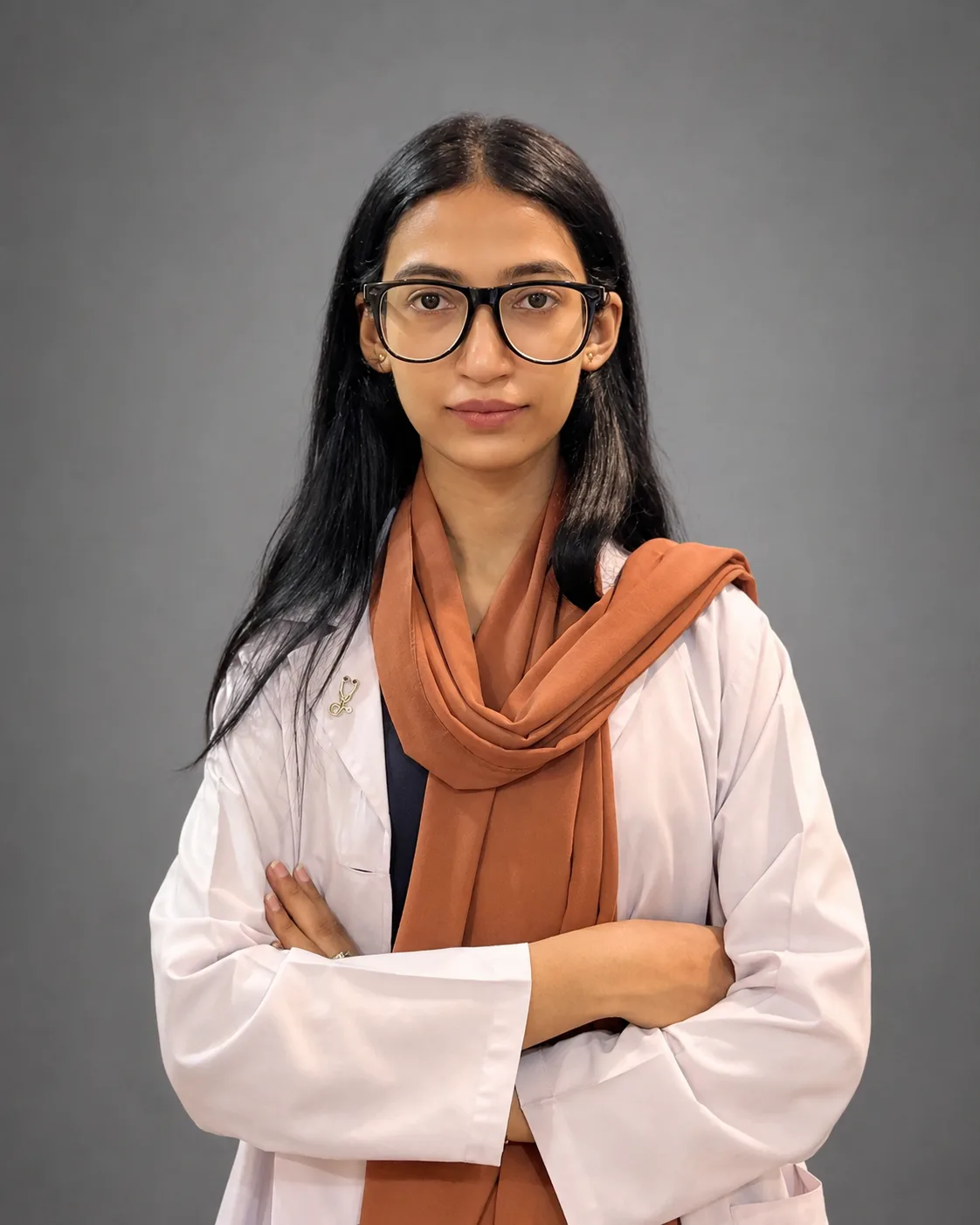
Miss. Aleena Fatima
Clinical NutritionistClinical Nutritionist

Dermatology, dental surgery and certified nutrition work alongside them, so every detail of how you look and feel is cared for in one place.
What to Expect, Month by Month
Weeks 1 to 8
Nothing visible, and often increased shedding. This is expected with topical treatment and is not a sign of failure, though it is the point at which most people quit.
Months 3 to 4
Shedding slows measurably. First reassessment against baseline trichoscopy.
Months 4 to 6
Existing hair thickens. This is when patients begin noticing it themselves rather than being told about it.
Months 6 to 12
The fullest benefit of the treatment, and a second formal reassessment.
Patient Reviews And Treatment Stories

I started PRP early, which the doctor said was the reason it worked. My brother left it four years and was told the same course would not do much for him.

I travelled from Mardan having already been given three different prices over the phone elsewhere. Here they examined my scalp first, put the quote in writing, and that was exactly what I paid. The doctor explained why FUT suited my case rather than selling me the newer option.

Serving Patients Across the Province and Beyond
Peshawar and Hayatabad
A regular share of our consultations, with scheduling flexible enough for a full scalp and donor assessment.
Charsadda & Mardan
Sending scalp and hair loss photos over WhatsApp beforehand helps us give you an early, honest read before your visit.
Across KPK
The same consultation and assessment standard applies regardless of where in the province you're travelling from.
Traveling to Us
Patients from across Pakistan are welcome, with WhatsApp assessment available before you commit to the trip.
Frequently Asked Questions
In practice, often yes, and most of our patients already have. The risk is not the medicine itself but everything that does not happen around it: no diagnosis, no suitability check, no measurement of whether it is working, and no one to consult if something goes wrong. Those four gaps are what a supervised prescription closes.
For genetic pattern hair loss, yes, and they are the only treatments that act on the cause rather than the symptom. They work best when started early, they require consistent long term use, and they protect rather than restore. Anyone promising regrowth of a bald scalp from a tablet is describing something no medicine does.
They are set out in full in the section above rather than buried here, because you should read them before you decide rather than while searching for reassurance afterwards. In summary, topical treatments commonly cause scalp irritation and unwanted hair growth where the solution spreads, and oral treatment for men is associated with sexual side effects in a minority of users.
For as long as you want the benefit. These treatments work while used and stop working when stopped, with gains fading over the months afterwards. It is a long term commitment rather than a course, and knowing that at the start matters.
Some hair loss medicines are unsafe in pregnancy and can cause serious birth defects, so they are not prescribed to women who could become pregnant without clear precautions. Women are also treated for causes men do not have, which is why a female consultation involves broader investigation before anything is prescribed.
Reduced shedding around month three, visible thickening between months four and six, fullest benefit by month twelve. Early shedding in the first weeks of topical treatment is normal and temporary.
Book Your Free Consultation in Peshawar
If you are already taking something, bring it with you. If you are not, bring your questions. Either way you will leave knowing what is causing your hair loss, whether medication is appropriate for you, and what it will realistically achieve.

They showed me the magnified images from my first visit next to the ones at six months. I could see the difference in the actual follicles, not just a photograph that might have been taken in better light.